



Arancini vs. Arancine: The Real Recipe and the Controversy
- Details
- Hits: 166

Introduction: A Symbol of Sicilian Identity
The arancino (or arancina) is not just a street food: it is a cultural experience, a symbol of belonging that divides and unites Sicily.
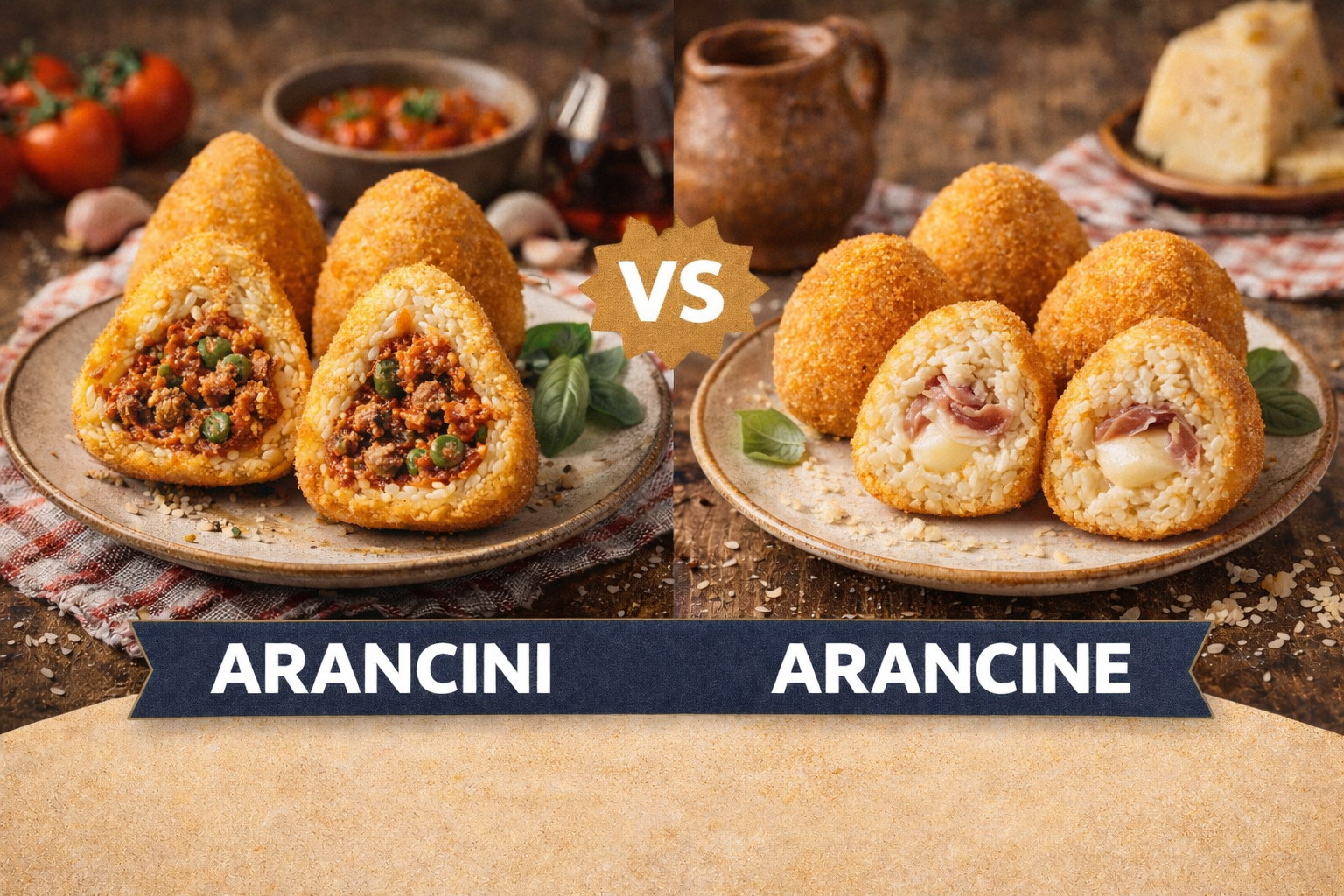
These delicious rice balls (or cones), filled, breaded, and fried, embody one of the island's most deeply felt gastronomic controversies in their names and shapes. Whether a "masculine" product (arancino) in Catania and eastern Sicily or a "feminine" product (arancina) in Palermo and the west, the identity value of this product is undeniable. Each bite speaks of centuries of domination, trade, and popular creativity.
History and Tradition: From Arab Kitchens to Modern Squares
The origins of the arancino/a date back to the period of Arab rule in Sicily (from the 9th to the 11th century). The Arabs introduced the custom of eating rice seasoned with saffron and herbs, shaped into balls, and at the same time popularized the use of citrus fruits and spices such as cinnamon. Sicilian ingenuity transformed this dish by adding a filling and breading, allowing it to be eaten on the go. Frying, a preservation and cooking technique, made it the perfect street food for celebrations, such as that of the patron saint, Saint Lucia, in Palermo, during which traditionally, instead of bread and pasta, legumes and, of course, arancini are eaten.
Production: Traditional vs. Modern Methods
Traditional Method:
-
The rice (preferably varieties such as Originario or Roma) is cooked in a meat or vegetable broth, often enriched with saffron which gives it the typical golden color.
-
The rice is left to cool on large marble tables (“màrmuri”) to avoid the formation of humidity.
-
It's shaped by hand, creating a hollow for the filling. The classics are "al ragù" (with peas, meat, and tomato sauce, often with the addition of caciocavallo cheese), "al burro" (with ham and béchamel sauce), and "agli spinaci" (spinach).
-
It is dipped in egg and breadcrumbs, then fried in abundant seed oil (or lard, according to the oldest recipes) until golden brown.
Modern/Industrial Method:
-
Use of forming machines to standardize shapes and weights.
-
Use pre-cooked or processed rice to reduce cooking times.
-
Sometimes baked (less traditional) as a “light” alternative to frying.
-
Freezing for large-scale distribution.
How to Recognize Quality
A quality arancini/a can be recognized by:
-
Shape and Color: The breading must be uniform, golden and crispy, without burning.
-
Weight and Consistency: It should be heavy for its size, a sign of the right balance between rice and filling. The breading should not come off when bitten.
-
Inside: The rice should be firm but not rubbery, moist and well-flavored. The filling should be central, flavorful, and not dry.
-
Label and Origin: When shopping, choose artisanal outlets that specify the use of local products (e.g., homemade ragù, Sicilian DOP cheeses). The PAT (Traditional Agri-food Product) certification guarantees preparation according to regional regulations.
-
The Crucial Element: Shape. In the east (Catania, Syracuse) it tends to be conical (arancino, perhaps reminiscent of Mount Etna), while in the west (Palermo, Trapani) it is round (arancina, like an orange). This difference is at the heart of the linguistic and cultural "war."
Uses in the Kitchen: From Tradition to Creativity
In addition to being eaten as street food or a substantial appetizer, arancini lend themselves to numerous interpretations:
-
Traditional: Arancini with ragù, butter, spinach, Bronte pistachio.
-
Creative: Stuffed with fish (shrimp, tuna), mushrooms, grilled vegetables, or in a “sweet” version with chocolate or ricotta filling.
-
In Structured Recipes: Cut in half as a base for warm salads, or served in mini-versions for appetizers.
Recommended Pairings with Sicilian Products
-
To Drink: A structured but unobtrusive red wine like a Cerasuolo di Vittoria or a Nero d'Avola . A light, slightly bitter Sicilian craft beer is also excellent.
-
Side dish: A simple orange and fennel salad with black olives to refresh the palate.
-
After: A dry dessert like toasted almonds or a small glass of dry Marsala .
Proper Storage
-
Fresh: They should be consumed within a few hours of frying, stored in a dry place. Never place them in closed plastic bags, where they will soften.
-
Cooking: If purchased raw and breaded, they can be stored in the refrigerator for a day, well spaced apart.
-
Frozen: Fried arancini freeze very well. Defrost them slowly in the refrigerator and then reheat them in a hot oven (not the microwave) to restore their crispiness.
Curiosities and Regional Differences
-
The Great Controversy: The gender of the name has fueled social media and discussions for centuries. The Accademia della Crusca has "cleared" both forms, attributing "arancina" to the literary tradition of Palermo and "arancino" to the Italian and Catanian traditions.
-
Size: In Palermo you often find giant “arancine,” even 500 grams, while in Catania they tend to be smaller.
-
"Identity" Fillings: In Messina, you can find the Messinese-style arancini, with ragù and eggplant; in Trapani, influenced by North African cuisine, couscous is sometimes used instead of rice.
-
An Evolving Art: Today there are dedicated festivals (like “Arancini&Co” in Catania) and Michelin-starred chefs who reinterpret the classic, but for Sicilians, their grandmother's version is always the best.
Ultimately, beyond the name and shape, the arancino/arancina remains a masterpiece of culinary ingenuity, a concentration of history and flavor that, in a single bite, reveals the complex and generous soul of Sicily. The only truly universal rule? Eat them hot, with your hands, perhaps while gazing out to sea.
Cosa ne pensi?
Inviaci un feedback!

 And then Add to Home Screen.